

Why Properly Closing an Estate is Crucial for Executors
Properly closing an estate is an essential responsibility for executors, ensuring that the deceased’s wishes are honored and legal requirements are met. This process involves detailed steps to gather assets, pay debts, distribute remaining assets to beneficiaries, and finally, close the estate. Here’s a quick overview if you’re wondering how to close an estate:
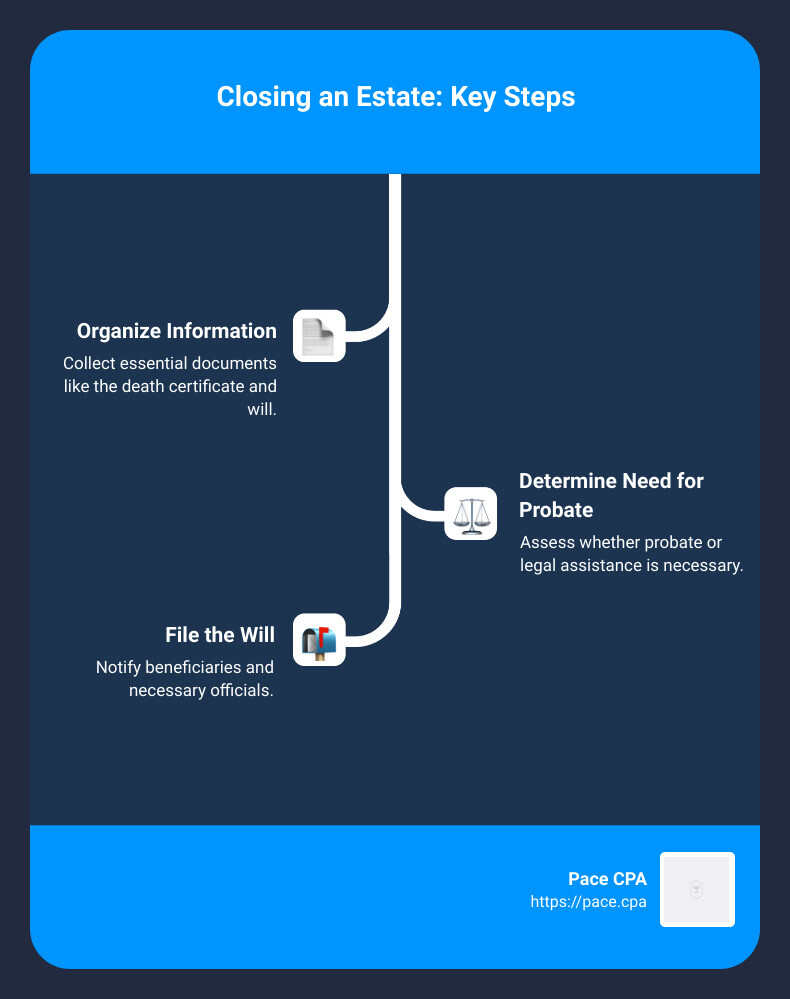
- Organize Important Information: Collect documents like the will and death certificate.
- Determine Need for Probate or Attorney Help: Assess if legal assistance is necessary.
- File the Will: Notify beneficiaries and officials.
- Take Inventory and Appraise Assets: List and value the estate’s assets.
- Set Up a Bank Account: Manage estate finances.
- Pay Taxes and Debts: Settle any outstanding liabilities.
- Distribute Assets: Allocate assets as per the will.
- Final Distribution and Close Estate: Ensure all tasks are complete and inform the court.
A comprehensive understanding of these responsibilities ensures a smoother and more efficient process, relieving stress from the beneficiaries and avoiding potential legal complications.
My name is John F. Pace, CPA, and with over 40 years in the tax profession, I specialize in estate administration and tax planning. From my experience as a Trust Officer for U.S. Trust and various senior CPA roles, I can guide executors through every step of how to close an estate. Let’s explore the details you’ll need to know.
Organize Important Information
When closing an estate, the first step is to organize all important information. This ensures a smoother and more efficient process, relieving stress from the beneficiaries and avoiding potential legal complications.
Death Certificate
The death certificate is a crucial document. You’ll need multiple certified copies for various tasks, such as closing bank accounts, filing for life insurance, and notifying government agencies. You can usually get these from the funeral home or the state’s vital records office.
Will
Locate the deceased’s will. Sometimes it’s straightforward, but other times it might be hidden in a safe deposit box or a fireproof safe. Once found, make a copy for yourself and file the original with the probate court.
Financial Institutions
Gather all financial documents, including bank statements, investment accounts, and retirement accounts. Notify these institutions of the death to freeze accounts and prevent unauthorized transactions. This step is essential for tracking the estate’s assets and liabilities.
Social Security
Notify the Social Security Administration (SSA) of the death. This will stop any future payments and help avoid the hassle of returning checks or direct deposits. Contact the SSA at 1-800-772-1213 as soon as possible.
Tax Return
You’ll need to file the deceased’s final tax return. Collect all necessary documents, such as W-2s, 1099s, and previous tax returns. This will help you determine any taxes owed and ensure compliance with the IRS.
Birth Certificate
Although it might not be the first document that comes to mind, having the deceased’s birth certificate can be helpful for various legal and administrative processes. It’s another piece of the puzzle in verifying the deceased’s identity.
Master List of Contacts
Create a master list of contacts, including beneficiaries, creditors, and any other relevant parties. This list will help you keep track of who needs to be notified and ensure that no one is left out of the loop.
By organizing these documents and pieces of information, you set a solid foundation for the estate settlement process. Next, we’ll look at determining the need for probate or attorney help.
Determine Need for Probate or Attorney Help
Once you’ve organized all the necessary information, it’s time to decide if you need to go through probate or if you need an attorney’s help. This step is crucial in understanding how to close an estate efficiently.
What is Probate?
Probate is the legal process of validating a will and distributing the deceased’s assets. It involves the probate court verifying the will, paying off any debts, and distributing the assets to the rightful heirs.
Do You Need Probate?
Not all estates require probate. Here are a few scenarios where probate might not be necessary:
– Small Estates: Some states allow for a simplified probate process if the estate is below a certain value.
– Joint Ownership: Assets held in joint tenancy or with rights of survivorship automatically pass to the surviving owner.
– Beneficiary Designations: Assets like life insurance policies and retirement accounts with named beneficiaries usually bypass probate.
When to Seek Attorney Help
The complexity of the estate will determine if you need an attorney. Here are situations where legal help is often necessary:
– Disputes: If there’s a dispute among heirs or creditors, an attorney can help mediate and resolve issues.
– Complex Estates: Large estates with diverse assets, business interests, or complicated debt structures often require legal expertise.
– Peace of Mind: Even if the estate seems straightforward, hiring an attorney can provide reassurance that everything is handled correctly.
Cost Considerations
Hiring an attorney can be costly. However, the complexity of the estate often justifies the expense. Some people choose to hire an attorney only for specific tasks rather than handling the entire process. This can help manage costs while still getting expert advice.
By understanding when probate is necessary and when to seek legal help, you can steer the estate settlement process more efficiently. Next, we’ll dig into filing the will and notifying necessary persons.
File the Will and Notify Necessary Persons
Once you’ve determined that probate is necessary, the next step is to file the will and notify all relevant parties. This step ensures that everyone who needs to know about the deceased’s estate is informed and that the legal process can move forward smoothly.
File the Will in Probate Court
First, you must file the original will with the probate court in the county where the deceased lived. This step officially begins the probate process. The court will then validate the will, appoint an executor if one isn’t already named, and issue what’s known as Letters of Administration. These letters give the executor the legal authority to manage the estate.
Notify Beneficiaries
After filing the will, you need to notify all the beneficiaries listed in the will. This step ensures that everyone who stands to inherit something from the estate is aware of their potential inheritance. You can do this through formal letters or even emails, but make sure to keep records of all notifications.
Inform Creditors and Banks
Next, you must notify any creditors and banks the deceased had accounts with. This includes credit card companies, mortgage lenders, and any other entities to which the deceased owed money. Creditors usually have a limited time (around six to nine months) to file claims against the estate.
Update the Post Office and Utility Companies
Don’t forget to inform the post office to forward any mail to the executor’s address. This ensures that important documents and bills are not missed. Additionally, notify all utility companies—like gas, water, and electricity providers—about the deceased’s passing. This helps manage ongoing expenses and prevents service interruptions.
Cancel Subscriptions and Notify Benefit Agencies
Cancel any ongoing subscriptions such as magazines, streaming services, or memberships. This prevents unnecessary charges to the estate. Also, notify any agencies that were offering benefits to the deceased, such as pension plans or social security. This step ensures that benefits are properly handled and prevents overpayments that might need to be returned later.
By following these steps, you can ensure that all necessary persons and entities are informed, setting the stage for a smoother probate process. Next, we’ll discuss how to take inventory and appraise estate assets.
Take Inventory and Appraise Assets
Taking inventory and appraising estate assets is a critical step in the estate settlement process. This ensures that all assets are accounted for and properly valued, setting the foundation for fair distribution to beneficiaries.
What is an Inventory?
An inventory is a detailed list of all the assets that belonged to the deceased. This includes everything from real estate to personal property, and even digital assets. The purpose of this inventory is to give a clear picture of the estate’s value and to ensure transparency among all interested parties.
What Should Be Included?
The inventory should be comprehensive and include:
- Real Property: This includes homes, land, and other real estate.
- Personal Property: Items like jewelry, furniture, and vehicles.
- Financial Assets: Bank accounts, stocks, bonds, and retirement accounts.
- Debts and Claims: Any money owed to the estate, including loans and promissory notes.
- Digital Assets: Cryptocurrencies, online accounts, and digital files.
Each item should be described in detail and assigned a value.
Executor Responsibilities
The executor is responsible for compiling this inventory. According to New Jersey probate law, the executor must account for every asset that comes to their knowledge. If they fail to do so, they could be held financially liable.
“It is a primary duty of an executor to gather in the assets of the estate; and in the discharge of this duty, to use only such care, skill, diligence, and caution as a person of ordinary prudence would undertake in matters of his own.”
Appraisal of Assets
Once the inventory is complete, the next step is the appraisal. This involves determining the fair market value of each asset at the time of the decedent’s death.
How to Appraise Different Types of Assets
- Real Property: Hire a professional real estate appraiser to determine the value of homes and land.
- Personal Property: For valuable items like jewelry and antiques, a professional appraiser is recommended. For everyday items, a general estimate can be made.
- Financial Assets: Bank statements and market prices can be used to value stocks, bonds, and retirement accounts.
- Digital Assets: These can be tricky. You might need a specialist to appraise cryptocurrencies and other digital holdings.
Disputing the Inventory
Interested parties, such as beneficiaries or creditors, have the right to dispute the inventory. They must prove “with reasonable certainty” that the inventory is inaccurate or incomplete. This ensures that all assets are fairly represented and valued.
Tips for Executors
- Be Thorough: Missing an asset can lead to legal and financial consequences.
- Stay Organized: Keep detailed records and receipts for everything.
- Seek Professional Help: Don’t hesitate to hire appraisers or accountants if needed.
Taking inventory and appraising assets might seem daunting, but it’s a crucial step in ensuring a fair and transparent estate settlement process. Next, we’ll discuss how to set up a bank account for the estate to manage ongoing expenses and obligations.
Set Up a Bank Account
Once you’ve taken inventory and appraised the assets, the next step is to set up a bank account dedicated to the estate. This ensures you manage the estate’s finances transparently and efficiently. Here’s how to go about it:
Letters of Administration
Before you can open an estate bank account, you’ll need Letters of Administration. These are legal documents issued by the probate court that authorize you as the executor or personal representative to manage the deceased person’s estate. Think of them as your official permission slip to act on behalf of the estate.
Estate Bank Account
With the Letters of Administration in hand, you can proceed to open an estate bank account. This account will be used to:
- Deposit incoming funds, such as paychecks, refunds, or proceeds from the sale of estate assets.
- Pay off any outstanding debts and final bills.
- Handle ongoing expenses, like court costs and lawyer fees.
Keeping estate finances separate from personal finances is crucial. It ensures transparency and simplifies the final accounting process.
Final Bills and Debts
As the executor, you’re responsible for paying the deceased’s final bills and debts. This might include:
- Utility bills: Ensure any remaining utility bills are paid to avoid penalties.
- Credit card debts: Notify credit card companies and settle any outstanding balances.
- Medical bills: Pay off any medical expenses incurred before the deceased’s passing.
Court Costs and Lawyer Fees
Managing an estate often involves legal and court costs. These can include:
- Probate court fees: Costs associated with filing documents and obtaining necessary approvals.
- Lawyer fees: If you’ve hired an attorney for guidance, their fees will also be paid from the estate bank account.

Why This Matters
Setting up a dedicated estate bank account is a key step in the estate settlement process. It helps maintain clear records and ensures that all financial transactions are properly documented. This not only makes your job easier but also provides transparency for beneficiaries and the court.
As you manage these financial responsibilities, remember to keep detailed records of all transactions. This will be invaluable when it’s time to close the estate and distribute assets to the beneficiaries.
Next, we’ll dig into the crucial task of paying taxes and debts to ensure the estate is in good standing before final distribution.
Pay Taxes and Debts
Paying taxes and debts is a vital step in how to close an estate. This ensures that all financial obligations are met before distributing the remaining assets to beneficiaries.
Tax Returns
First, you’ll need to file the deceased person’s final income tax return. This covers the period from January 1st of the year they passed away until the date of death. If the deceased had a tax preparer, they can be a big help.
Pro Tip: Don’t forget to check for any tax refunds owed to the deceased. This money can be added to the estate.
Federal Estate Tax
Federal estate taxes apply only to large estates. For 2023, estates valued over $12.92 million for individuals (or $25.84 million for couples) are subject to this tax. If the estate is below this threshold, you won’t need to worry about it.
State-Level Estate Taxes
Some states have their own estate taxes, which may kick in at lower thresholds than the federal level. It’s important to know the rules in the state where the deceased lived. For example, New Jersey has a separate estate tax that might apply even if federal estate tax doesn’t.
Gift Tax
If the deceased made large gifts during their lifetime, these might affect the estate tax calculation. The IRS allows annual gift tax exclusions, but amounts above this could reduce the estate tax exemption.
Income Tax
The estate itself might earn income after the deceased’s death. This could be from interest, dividends, or rental income. You’ll need to file an income tax return for the estate using an EIN (Employee Identification Number).
Debts
You must also pay off any legitimate debts the deceased owed. This includes credit card bills, mortgages, personal loans, and medical bills. Always verify the debts before paying them to avoid paying fraudulent claims.
Important: If the estate doesn’t have enough money to cover all debts, stop paying and seek guidance from the court or an attorney. They can help prioritize which debts to pay first.
Estate Obligations
Keep track of all these transactions and maintain detailed records. This will help you when it’s time to file the final accounting with the probate court.
Quick Tip: Use a dedicated estate bank account to manage all income and expenses. This keeps everything organized and transparent.
Once all taxes and debts are settled, you’re ready for the final step—distributing the remaining assets to the beneficiaries.
Next, we’ll explore how to distribute assets accordingly, ensuring everyone gets what they are entitled to.
Distribute Assets Accordingly
Now that all taxes and debts are settled, it’s time to distribute the remaining assets to the beneficiaries. This step involves handling specific gifts, the residuary estate, and various types of property.
Specific Gifts
Specific gifts are items or sums of money that the deceased left to particular people or organizations. These are clearly stated in the will. For example, “I leave my diamond ring to my daughter, Jane.”
Steps to Distribute Specific Gifts:
- Identify the Items: Review the will to find all specific gifts.
- Locate the Beneficiaries: Make sure you have the current contact details for each beneficiary.
- Transfer Ownership: Hand over the items or funds as specified in the will. For valuable items like jewelry or art, you may need to get a professional valuation first.
Residuary Estate
The residuary estate is what’s left after all specific gifts, debts, and expenses are taken care of. This usually includes cash, investments, and any property not specifically mentioned in the will.
Steps to Distribute the Residuary Estate:
- Calculate the Total Value: Add up everything left in the estate.
- Follow the Will’s Instructions: Distribute the residuary estate according to the will. If the will says to divide it equally among three children, each child gets one-third.
- Use Estate Bank Account: Transfer the funds from the estate bank account to the beneficiaries.
Personal Property
Personal property includes items like furniture, clothing, and collectibles. These can be distributed according to the will or, if not mentioned, through an agreement among the beneficiaries.
Tips for Distributing Personal Property:
- Create an Inventory: List all items and their estimated value.
- Discuss with Beneficiaries: Have a meeting to decide who wants what. This can prevent conflicts.
- Sell or Donate Unwanted Items: If no one wants certain items, consider selling or donating them. The proceeds can go back into the estate.
Real Property
Real property includes homes, land, and buildings. If the will specifies who gets the real property, you’ll need to prepare an executor deed or administrator deed to transfer ownership.
Steps to Transfer Real Property:
- Prepare the Deed: Work with a lawyer to create the necessary documents.
- Sign and Notarize: Make sure the deed is signed and notarized.
- File with Local Authorities: Submit the deed to the appropriate office to officially change ownership.
Digital Property
In today’s digital age, estates often include digital assets like cryptocurrencies, online accounts, and digital media. These can be tricky to handle but are just as important.
Steps to Manage Digital Property:
- Identify Digital Assets: Make a list of all digital assets, including login information.
- Assess Value: Some digital assets, like cryptocurrencies, may need a professional valuation.
- Transfer or Close Accounts: Follow the will’s instructions for distributing these assets. You may need to work with digital platforms to transfer ownership.
Executor Deed and Administrator Deed
These deeds are legal documents used to transfer real property from the estate to the beneficiaries. An executor deed is used when there’s a will, and an administrator deed is used if there’s no will.
Important Points:
- Executor Deed: You’ll need this if the will names specific beneficiaries for real property.
- Administrator Deed: Use this if the estate is being handled without a will.
Quick Tip: Always consult with a legal professional when preparing these deeds to ensure everything is done correctly.
Next, we’ll discuss how to close an estate, including the final distribution process and court approvals.
How to Close an Estate
Informal vs. Formal Distribution Process
Closing an estate involves distributing the remaining assets to the rightful beneficiaries. This process can either be informal or formal, depending on the state laws and the complexity of the estate.
Informal Distribution Process:
In an informal distribution, the Personal Representative (executor) can distribute assets during the probate process. They must follow the directions in the will or, if there is no will, the intestate succession rules. However, it’s wise to wait until the creditor claim period ends to avoid complications. After making distributions, the Personal Representative reports back to the probate judge on how the assets were distributed.
Formal Distribution Process:
A formal distribution requires the Personal Representative to propose a distribution plan to the probate judge. The court reviews the plan to ensure it aligns with the will or state laws. Once approved, the court issues a formal order of distribution. The Personal Representative is not legally allowed to distribute assets until receiving this court approval.
Key Differences:
- Informal Distribution: More flexibility, quicker, but riskier if debts arise later.
- Formal Distribution: More structured, slower, but ensures all legal requirements are met.
Final Distribution of Assets
The final distribution of assets marks the concluding step in the probate process. This involves ensuring all creditors are paid, taxes are filed, and remaining assets are distributed according to the will or state laws.
Executor Responsibilities:
- Gathering Assets: Collect all assets, both probate and non-probate.
- Paying Debts and Taxes: Settle all outstanding debts and file necessary tax returns.
- Distributing Assets: Follow the will’s instructions for specific gifts and then distribute the residuary estate (remaining assets).
Specific Gifts vs. Residuary Estate:
- Specific Gifts: Items or amounts of money explicitly mentioned in the will.
- Residuary Estate: All remaining assets after specific gifts are distributed.
Court Approval:
For the final distribution, the Personal Representative may need to seek court approval, especially in a formal distribution process. This ensures all steps were properly followed, and the probate judge can officially close the estate.
Steps for Final Distribution:
- Prepare a Final Accounting: Summarize all transactions, including income, expenses, and distributions.
- File a Petition: Submit a petition for final distribution to the probate court.
- Notify Interested Parties: Inform all beneficiaries and interested parties about the distribution plan.
- Attend Court Hearing: Present the final accounting and distribution plan to the court.
- Receive Court Order: Obtain a court order authorizing the final distribution of assets.
Important Points:
- Informal Accounting: A general summary of transactions, usually quicker and less detailed.
- Formal Accounting: Detailed and thorough, often required for complex estates or if disputes arise.
By following these steps, you ensure that the estate is closed properly and all beneficiaries receive their rightful shares.
Next, we’ll address some frequently asked questions about how to close an estate, including timelines and necessary documentation.
Frequently Asked Questions about How to Close an Estate
How Long Does an Executor Have to Settle an Estate?
The time it takes for an executor to settle an estate varies widely. Factors like state laws, the complexity of the estate, and whether or not the estate has to go through probate play significant roles.
- State Laws: Different states have different requirements and deadlines. For instance, Texas allows up to four years to file a will for probate, while Illinois gives just 30 days. Some states, like New York and New Jersey, do not have specific deadlines.
- Complexity: A simple estate with few assets and no debts may take a few months. Complex estates with multiple properties, significant assets, and numerous beneficiaries might take several years.
- Probate: If the estate goes through probate, expect it to last between six months and two years, depending on the factors mentioned above.
Regardless of these variables, the executor generally has as long as necessary to settle the estate, provided all statutory deadlines are met.
Do I Need an EIN to Settle an Estate?
Yes, you need an EIN (Employer Identification Number), also known as a Tax ID number, to settle an estate. This number is crucial for several reasons:
- Tax Filing: The EIN is used to file taxes on behalf of the estate, including federal estate taxes, state-level estate taxes, and income taxes.
- Financial Transactions: The EIN is required to open an estate bank account to manage the deceased’s final bills, court costs, and lawyer fees.
- IRS Requirements: The IRS mandates the use of an EIN for estates to ensure proper tax reporting and compliance.
Can a House Stay in a Deceased Person’s Name?
No, a house cannot stay in a deceased person’s name. The transfer depends on several factors:
- Joint Ownership: If the house was co-owned with the right of survivorship, the property automatically goes to the surviving co-owner.
- Will or Estate Plan: If the house was solely owned, the title passes according to the deceased’s will or estate plan.
- Intestate: If the owner dies without a will (intestate), state laws determine who inherits the property.
In all cases, the property must be retitled to reflect the new ownership, whether it’s through probate or another legal mechanism.
Understanding these frequently asked questions can help you steer the estate settlement process more efficiently. For more information on specific steps, refer to the detailed guidelines provided earlier.
Conclusion
Closing an estate can seem like a daunting task, but with the right steps and guidance, it becomes manageable. From organizing important information and determining the need for probate, to filing the will, taking inventory, and finally distributing assets, each step is crucial for ensuring a smooth and legal transfer of the deceased’s property.
Pace CPA is here to assist you through every phase of this journey. Our team of experts can help you steer the complexities of probate final accounting and ensure that you fulfill your responsibilities as an executor.
Professional assistance is essential to avoid common pitfalls and hidden costs. Whether it’s handling tax returns, settling debts, or ensuring proper distribution of assets, our experienced professionals can provide the support you need.
As an executor, you have a fiduciary duty to act in the best interest of the estate and its beneficiaries. By following a structured process and seeking professional help when needed, you can close the estate efficiently and with peace of mind.
For more detailed information on how to close an estate and to get assistance with probate final accounting, contact Pace CPA today. We’re here to ensure a fair and legal distribution of the estate’s assets, providing peace of mind for you and the beneficiaries.


