

Estate Accounting in Virginia: A Simple Guide for Executors
If you’re looking for an estate accounting sample, you’re in the right place. Here you’ll find what you need quickly:
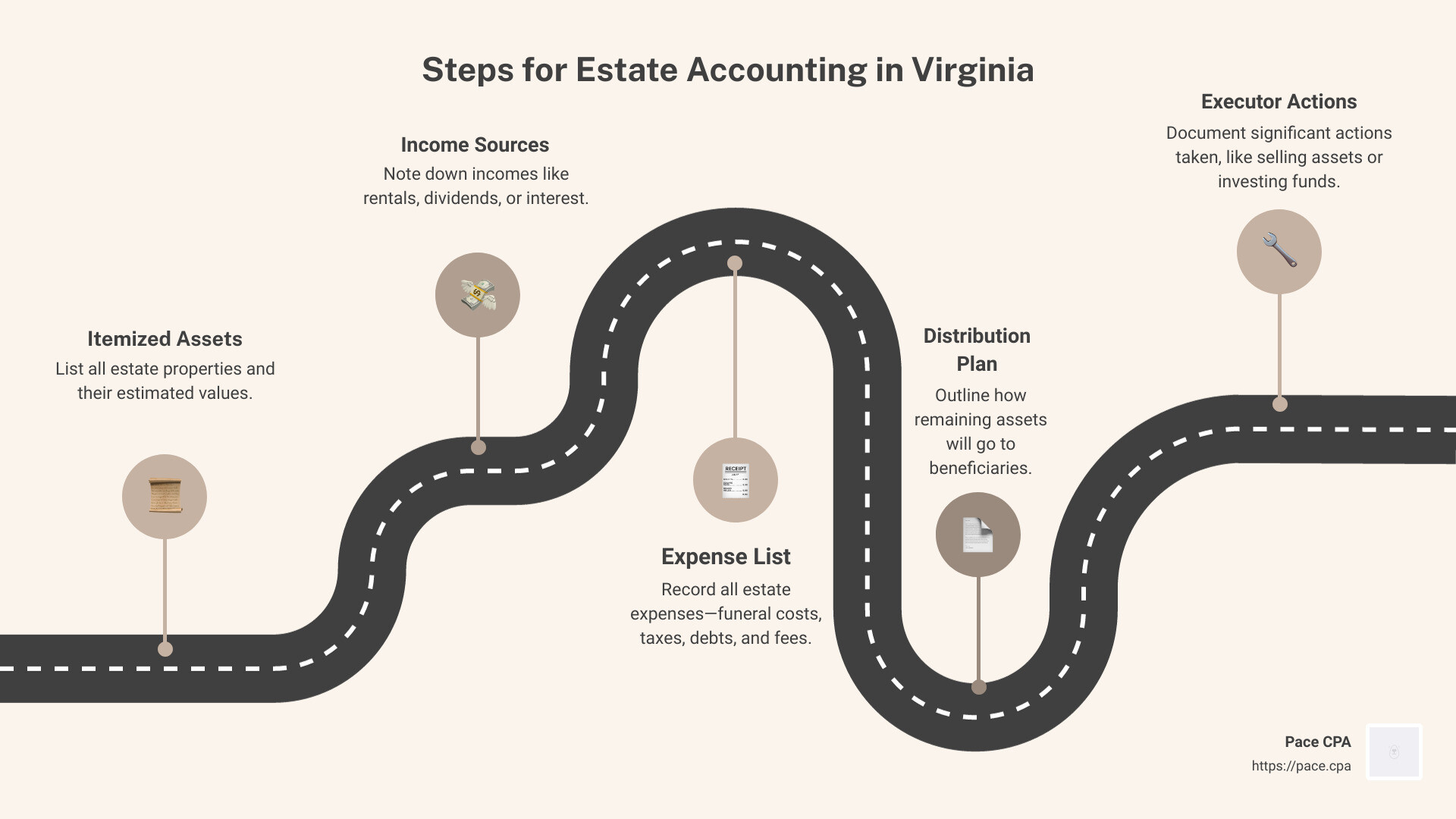
- Itemized Assets: List all estates’ properties and their estimated values.
- Income Sources: Note down any incomes like rentals, dividends, or interest.
- Expense List: Record all costs paid from the estate—funeral costs, taxes, debts, and administration fees.
- Distribution Plan: Outline how remaining assets will go to beneficiaries.
- Executor Actions: Explain any significant actions taken, like selling assets or investing funds.
Estate planning can be a daunting task, filled with complex financial details and legal responsibilities. In Virginia, executors must ensure they handle the estate carefully and transparently. This involves accurate record-keeping and regular updates to beneficiaries about the estate’s status.
I’m John F. Pace, CPA, a seasoned expert with over 40 years in estate and tax planning. I’ve witnessed the common pitfalls and the best practices in estate accounting sample. Let’s dive into the key elements to make your role as an executor more manageable.
Quick estate accounting sample terms:
– example of probate final accounting
– how to prepare probate final accounting
– what is a final accounting in probate
What is Estate Accounting?
Estate accounting is the process of managing and documenting all financial transactions related to a deceased person’s estate. This ensures that assets are properly distributed, debts are settled, and everything is done transparently and legally.
Definition
Estate accounting involves keeping track of all the financial activities of an estate from the time of the decedent’s death until the final distribution of assets. This includes documenting income, expenses, debts, and distributions to beneficiaries.
Purpose
The main purpose of estate accounting is to ensure that the estate is managed in accordance with the decedent’s will or, if there is no will, according to state laws. Proper accounting helps prevent disputes among beneficiaries and ensures that creditors are paid.
Executor Duties
The executor, also known as the personal representative, has several critical duties in estate accounting:
Collect and Value Assets: The executor must identify and appraise all assets in the estate. This includes real estate, bank accounts, investments, personal belongings, and any other property owned by the decedent.
Pay Debts and Liabilities: The executor is responsible for identifying and paying any valid debts and liabilities. This could include mortgages, credit card bills, and other outstanding obligations.
Distribute Assets: After paying off debts, the executor distributes the remaining assets to the beneficiaries as specified in the will or by state law.
Prepare and Submit Accounting: The executor must compile a detailed account of all financial transactions and submit it to the court and beneficiaries. This includes all income received, expenses paid, and assets distributed.
Financial Transactions
Estate accounting involves a variety of financial transactions, including:
Income: Any income generated by the estate’s assets, such as rent from property, interest from bank accounts, or dividends from investments.
Expenses: Costs incurred by the estate, such as funeral expenses, taxes, legal fees, and administrative costs.
Debts: Payments made to settle the decedent’s debts, including mortgages, credit cards, and personal loans.
Distributions: Transfers of assets to beneficiaries as outlined in the will or by state law.

Example
Imagine an estate that includes a house, a bank account, and an investment portfolio. The executor would need to:
- Inventory the Assets: List the house, bank account, and investments, along with their values.
- Appraise the House: Hire a professional appraiser to determine the fair market value of the house.
- Settle Debts: Pay off the mortgage on the house and any outstanding credit card bills.
- Distribute Assets: Transfer the house to the designated beneficiary and distribute the bank account and investments according to the will.
- Prepare the Accounting: Document all these transactions and submit a detailed report to the court and beneficiaries.
By following these steps, the executor ensures that the estate is managed properly and transparently, fulfilling their fiduciary duty to both the decedent and the beneficiaries.
Steps to Prepare an Estate Accounting
Preparing an estate accounting is a detailed process that ensures all financial aspects of an estate are managed correctly. Here are the key steps to follow:
1. List of Debts and Assets
The first step is to compile a comprehensive list of all debts and assets. This involves:
Collecting Financial Information: Gather all relevant documents, including bank statements, investment statements, bills, and receipts. This ensures you have a complete record of the estate’s finances.
Identifying Assets and Liabilities: List all properties, personal belongings, and outstanding debts. This includes real estate, vehicles, jewelry, credit card balances, mortgages, and any taxes owed.
2. Reconciliation
Next, you need to reconcile all financial transactions. Reconciliation ensures that all financial activities are accurately tracked and accounted for. This involves:
Recording Income and Expenses: Document any income the estate receives, such as rental income or dividends, and keep track of all expenses, including probate attorney fees, taxes, and maintenance costs.
Maintaining Detailed Records: Keep meticulous records of all receipts and disbursements. This helps avoid discrepancies and ensures transparency.
3. Probate Application
Once you have a clear picture of the estate’s financial situation, the next step is to apply for probate. This legal process validates the will (if there is one) and grants the executor the authority to manage the estate. The probate application involves:
Filing the Necessary Forms: Complete and submit the required forms to the probate court. This typically includes an inventory of the estate’s assets and liabilities.
Notifying Interested Parties: Inform beneficiaries and creditors about the probate proceedings. This ensures everyone involved is aware of the process and can raise any concerns.
4. Supporting Documentation
Throughout the estate accounting process, it’s crucial to maintain supporting documentation. This includes:
Inventory Forms: Complete the inventory forms required by your state, listing all assets and their fair market value at the time of death.
Appraisals: Obtain professional appraisals for valuable items like real estate and collectibles to determine their fair market value.
Tax Returns: File any necessary income tax and estate tax returns. Be aware of deadlines to avoid penalties.
Final Accounting Report: Prepare a detailed final accounting report that documents all financial transactions and presents a clear picture of the estate’s financial activities.
By following these steps, you ensure that the estate is managed properly and transparently, fulfilling your fiduciary duty to both the decedent and the beneficiaries. This process can be complex, but it is essential for the fair and legal distribution of the estate’s assets.
When managing an estate in Virginia, preparing an accurate and detailed estate accounting sample is essential. This document provides a clear picture of the estate’s financial transactions, assets, and liabilities. Here’s a breakdown of what this should include:
Detailed Document
An estate accounting document should be thorough and transparent. It typically covers the following sections:
- Itemized Assets: A comprehensive list of all the estate’s assets.
- Income Sources: Any income generated by the estate during administration.
- Expense List: All expenses paid from the estate.
- Distribution Plan: How remaining assets will be distributed to beneficiaries.
- Executor Actions: Explanation of significant decisions made by the executor.
Financial Transactions
Detailing financial transactions is crucial for transparency. This involves:
- Recording Income: Document any income the estate receives, like rental income, dividends, or interest from bank accounts.
- Tracking Expenses: Keep an itemized list of all expenses, such as funeral costs, taxes, outstanding debts, and administration costs.
- Receipts and Disbursements: Maintain detailed records of all receipts and payments.
Assets
The assets section should provide a clear inventory of everything the deceased owned. This includes:
- Real Estate Properties: List all properties with their estimated value at the time of death.
- Bank Accounts: Include all bank account balances.
- Investment Accounts: Detail any stocks, bonds, or other investments.
- Personal Property: Document valuable items like jewelry, vehicles, and art.
Liabilities
Listing liabilities helps in understanding what needs to be paid out from the estate. This includes:
- Outstanding Debts: Credit card balances, mortgages, and any other debts.
- Taxes: Income and estate taxes owed.
- Administration Costs: Legal fees, executor fees, and other costs related to managing the estate.
Example Format
Here’s a simplified example of how an estate accounting document might look:
| Section | Details |
|---|---|
| Itemized Assets | Real Estate: $500,000, Bank Accounts: $50,000, Investments: $200,000 |
| Income Sources | Rental Income: $10,000, Dividends: $5,000 |
| Expense List | Funeral Expenses: $15,000, Taxes: $20,000, Debts: $30,000 |
| Distribution Plan | Distribution to Beneficiaries: $690,000 |
| Executor Actions | Sold property to pay debts, Invested in short-term bonds |
Supporting Documentation
To back up the detailed breakdown, executors must provide various supporting documents. Beneficiaries have the right to request these documents for review. Supporting documentation includes:
- Inventory Forms: Listing all assets and their fair market value.
- Appraisals: Professional appraisals for valuable items.
- Tax Returns: Filed income tax and estate tax returns.
- Receipts and Bills: Proof of all expenses paid from the estate.
By preparing a detailed and transparent estate accounting document, executors can ensure they are fulfilling their fiduciary duties and providing clarity to all beneficiaries. This approach not only helps in managing the estate efficiently but also builds trust among all parties involved.
Final Account Report for an Estate
The final account report is one of the most critical documents in estate administration. It serves as a comprehensive report of all financial transactions related to the estate, ensuring transparency and accountability.
Comprehensive Report
The final account report includes a complete breakdown of the estate’s financial activities. This ensures that all assets, liabilities, income, and expenses are documented. The key sections typically covered are:
- Itemized Assets: A detailed inventory of the estate’s assets, including real estate, bank accounts, investments, and personal property.
- Income Sources: Any income generated by the estate during its administration, such as rental income or dividends.
- Expense List: All expenses paid from the estate, including funeral costs, taxes, and outstanding debts.
- Distribution Plan: How the remaining assets will be distributed to the beneficiaries.
- Executor Actions: A summary of significant actions taken by the executor, like selling assets to pay debts or investing estate funds.
Here’s a simplified example format:
| Section | Details |
|---|---|
| Itemized Assets | Real Estate: $500,000, Bank Accounts: $50,000, Investments: $200,000 |
| Income Sources | Rental Income: $10,000, Dividends: $5,000 |
| Expense List | Funeral Expenses: $15,000, Taxes: $20,000, Debts: $30,000 |
| Distribution Plan | Distribution to Beneficiaries: $690,000 |
| Executor Actions | Sold property to pay debts, Invested in short-term bonds |
Court Approval
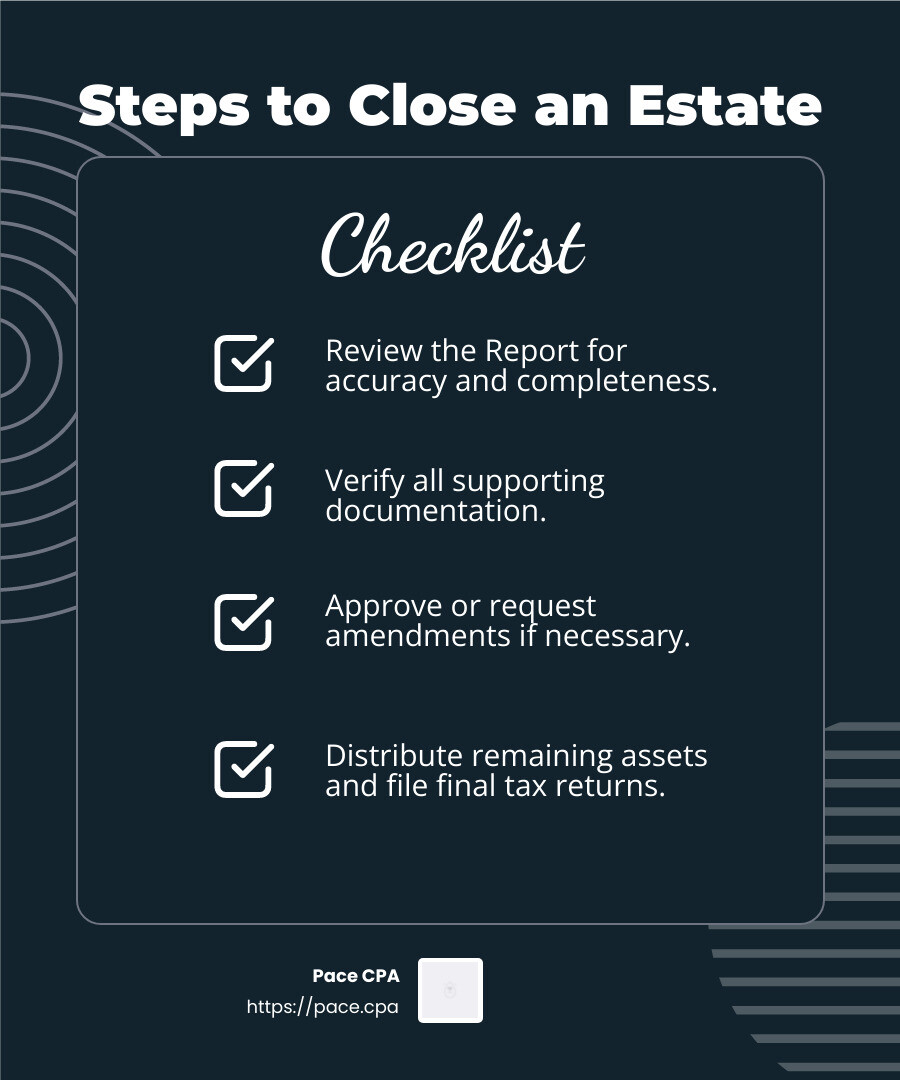
Before the estate can be closed, the final account report must be submitted to the court for approval. This step is crucial as it ensures that all actions taken by the executor are reviewed and validated by the court.
The court will:
- Review the Report: Check for accuracy and completeness.
- Verify Supporting Documentation: Ensure all supporting documents are in order.
- Approve or Request Amendments: Either approve the report or request revisions if there are discrepancies.
Supporting Documentation
Supporting documentation is essential for backing up the details in the final account report. Executors should be prepared to provide:
- Inventory Forms: Listing all assets and their fair market value.
- Appraisals: Professional appraisals for valuable items.
- Tax Returns: Filed income tax and estate tax returns.
- Receipts and Bills: Proof of all expenses paid from the estate.
Beneficiaries have the right to request and review these documents to ensure transparency.
Closing the Estate
Once the court approves the final account report, the estate can be officially closed. This involves:
- Distributing Remaining Assets: Following the distribution plan outlined in the report.
- Filing Final Tax Returns: Ensuring all final taxes are paid.
- Releasing the Executor: Officially releasing the executor from their duties.
By following these steps and ensuring a detailed and accurate final account report, executors can fulfill their fiduciary duties and provide clarity to all beneficiaries.
Next, let’s explore the Order of Payment from an Estate, focusing on the specific laws and regulations in Virginia.
Order of Payment from an Estate
In Virginia, the order of payment from an estate is critical to ensure that all debts and obligations are settled properly before distributing any remaining assets to beneficiaries. Here’s a clear breakdown of the steps and priorities involved:
1. Debts to Government
The first priority is paying any debts owed to the government. This includes:
Federal and State Taxes: Any outstanding income taxes, estate taxes, or property taxes must be paid first. The IRS and state tax authorities have the legal right to claim their dues before any other creditors.
Unpaid Penalties and Interest: If there are any penalties or interest accrued on unpaid taxes, these must also be settled.
2. Estate Administration Expenses
Next, the estate must cover all expenses related to its administration. These include:
Executor Fees: Compensation for the executor for managing the estate’s affairs.
Legal Fees: Costs incurred for legal advice or representation during the probate process.
Accounting Fees: Payments for professional accounting services to handle the estate’s finances.
Administrative Costs: Other necessary expenses, such as filing fees, appraisals, and postage.
3. Secured Obligations
After settling government debts and administration expenses, the estate must pay off any secured obligations. These are debts that are backed by collateral, such as:
Mortgages: Loans secured by real estate. If the deceased had a mortgage, it must be paid off to prevent foreclosure.
Car Loans: Auto loans secured by vehicles. These must be paid to avoid repossession.
4. Unsecured Debts
Once secured obligations are settled, the estate can then address unsecured debts, which include:
Credit Card Debt: Any outstanding balances on credit cards.
Medical Bills: Unpaid medical expenses incurred before the deceased’s death.
Personal Loans: Loans that are not backed by collateral.
5. Funeral Expenses
Funeral and burial costs are typically one of the first expenses to be paid, but they fall under a specific category of priority:
- Funeral Costs: Use estate funds to cover the costs of the funeral and burial. This is essential to ensure that these immediate expenses are taken care of.
6. Distribution to Beneficiaries
Finally, after all debts and expenses are paid, the remaining assets can be distributed to the beneficiaries as outlined in the will or by state law if no will exists.
- Asset Distribution: Follow the distribution plan to ensure all beneficiaries receive their fair share. This includes any remaining property, financial accounts, or personal belongings.
By adhering to this order of payment, executors can ensure that all legal and financial obligations are met, minimizing the risk of disputes among creditors and beneficiaries.
Next, let’s explore the Frequently Asked Questions about Estate Accounting, where we will address common queries and provide clear answers.
Frequently Asked Questions about Estate Accounting
What is an accounting of the estate?
An accounting of the estate is a detailed document prepared by the executor that outlines all financial transactions related to the estate. This document ensures transparency and keeps beneficiaries informed about how the estate’s assets are managed and distributed.
Key Components:
– Itemized Assets: Includes real estate, bank accounts, investments, and personal property.
– Income Sources: Any income generated by the estate, such as rental income or dividends.
– Expense List: All expenses paid from the estate, including funeral costs, taxes, and debts.
– Distribution Plan: Details of how the remaining assets will be distributed to the beneficiaries.
What is the format for executor account?
The format for an executor account typically includes several key sections to ensure comprehensive reporting:
1. List of Debts and Assets:
– Debts: Credit card balances, loans, and unpaid bills.
– Assets: Real estate, bank accounts, investments, and personal property.
2. Financial Transactions:
– Income: Document any income received by the estate.
– Expenses: Record all expenses, such as legal fees, taxes, and administrative costs.
3. Reconciliation:
– Balances: Ensure the accounting balances by matching total assets with total liabilities and distributions.
4. Supporting Documentation:
– Receipts and Statements: Attach receipts, bank statements, and other relevant documents to support the entries.
What is the final account report for an estate?
The final account report is a comprehensive document that sums up all financial activities during the probate process. It shows a zero balance, meaning all assets have been distributed, and no funds remain.
Steps to Prepare the Final Account:
– Trial Balance: Start with a trial balance listing all debit items (expenses and distributions) and credit items (income and assets).
– Record All Transactions: Document every financial transaction, including income received and expenses paid.
– Prepare Supporting Documents: Gather receipts, tax returns, and account statements.
– File Tax Returns: Ensure all necessary tax returns are filed and taxes are paid.
– Zero Balance: Ensure the final account shows a zero balance, indicating that all funds have been distributed.
– Submit to Court: File the final accounting with the court, including the tax certificate and supporting documents.
By understanding these FAQs, executors and beneficiaries can better steer the probate process, ensuring a fair and transparent distribution of the estate.
Conclusion
Navigating the complexities of tax preparation and estate accounting can be overwhelming, but it doesn’t have to be. At Pace CPA, we are here to simplify the process and provide expert guidance custom to your unique needs.
Expert Tax Preparation
Our team of certified public accountants (CPAs) and enrolled agents are well-versed in the latest tax laws and regulations. Whether you need help with a simple W-2 filing or complex business taxes, we ensure every deduction and credit is accounted for, maximizing your tax return.
Financial Guidance
Beyond tax preparation, we offer comprehensive financial services. From tax planning and bookkeeping to financial advising, our goal is to help you make informed financial decisions that benefit your bottom line. For businesses, we understand the unique challenges faced by employee-powered enterprises and work closely with you to develop strategies that support your growth and compliance needs.
Employee-Powered Businesses
Our specialized services are designed to meet the needs of businesses driven by dedicated employees. We offer custom strategies that not only ensure compliance but also support your business growth.
Take the Next Step
Ready to simplify your tax season and ensure your financials are in expert hands? Find how our business tax services can help your business thrive. Contact Pace CPA today for a free consultation.
Let us be your partner in navigating the complexities of taxes and estate accounting so you can focus on what you do best—running your business.
For more information on probate final accounting, visit our service page.
By choosing Pace CPA, you gain a reliable partner dedicated to making financial management easier and more efficient, ensuring your peace of mind.


