

Why Understanding Bookkeeping Startup Costs is Crucial
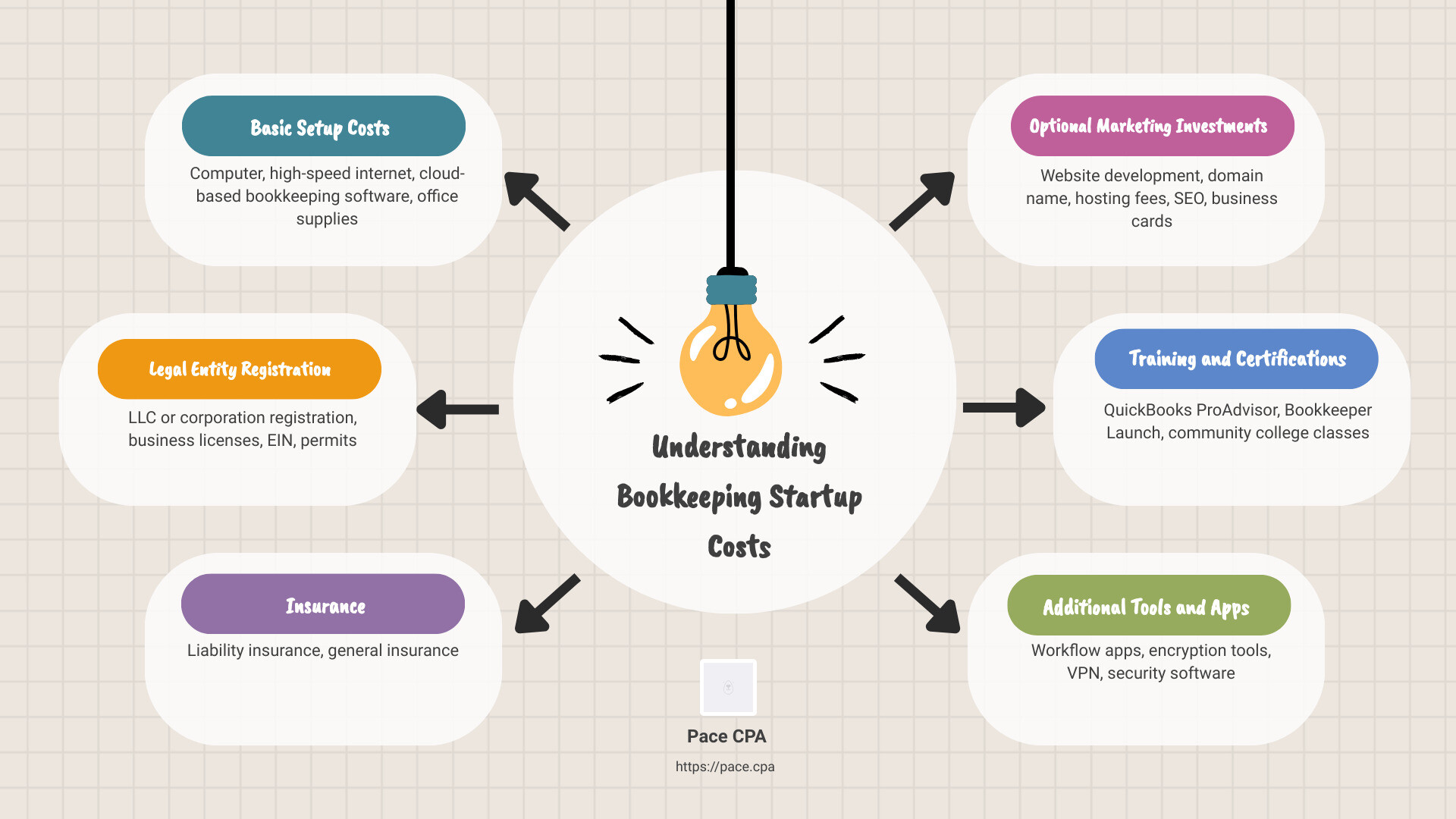
Starting a bookkeeping business can be a rewarding venture, but understanding the bookkeeping startup costs from the get-go is crucial. To give you a quick overview, here’s what these costs often include:
- Basic Setup Costs:
- Computer and high-speed internet
- Cloud-based bookkeeping and accounting software
Office supplies
Essential Business Expenses:
- Legal entity registration (LLC or corporation)
- Business licenses and permits
Insurance (liability and general)
Optional Investments:
- Marketing and website development
- Training and certifications
- Additional tools and apps
Bookkeeping is not only a respectable profession, but it’s also one of the most profitable businesses you can start. With a built-in demand and the flexibility to work from anywhere, this business offers immense potential for growth and financial independence.
I’m John F. Pace, CPA, and I have over 40 years of experience in tax planning and financial management. My extensive career has provided me with deep insights into managing bookkeeping startup costs effectively. Let’s dive into the details to ensure you’re fully prepared.
Next, we’ll explore the essential costs you need to consider when starting a bookkeeping business.
Essential Costs for Starting a Bookkeeping Business
Starting a bookkeeping business comes with several essential costs. These are the fundamental expenses you need to budget for to get your business up and running smoothly. Let’s break them down into three main categories: Legal Entity and Licensing, Office Supplies and Equipment, and Software and Tools.
Legal Entity and Licensing
First, you need to establish your business as a legal entity. Many bookkeepers choose to form a Limited Liability Company (LLC). This structure protects your personal assets from business liabilities.
LLC Formation: The cost of forming an LLC varies by state. On average, expect to pay between $50 to $500 in state fees.
Business License: You’ll need a business license to operate legally. The cost can range from $50 to $400, depending on your location and type of business.
Registration Fees: Besides state fees, some cities or counties may require additional registration. These fees can vary, so check with your local government.
EIN (Employer Identification Number): This unique number is free to obtain from the IRS and is crucial for tax purposes and opening a business bank account.
Insurance: Protect your business with Errors and Omissions Insurance (around $200 downpayment) and Liability Insurance. These insurances safeguard you against potential legal claims.
Office Supplies and Equipment
Setting up your office requires some essential supplies and equipment to ensure you can work efficiently.
Computer: A reliable computer is non-negotiable. Expect to spend around $800 to $1,200 for a good-quality machine.
Printer and Scanner: These are necessary for handling physical documents. A decent all-in-one printer/scanner can cost around $100 to $200.
Dual Monitors: Dual monitors can significantly increase your productivity. Plan to spend about $200 for a pair.
Office Supplies: Basic supplies like pens, paper, and filing cabinets will cost around $100.
Software and Tools
To manage your clients’ books effectively, you’ll need specialized software and tools.
QuickBooks Online Accountant: This is a must-have for any bookkeeper. The certification can cost around $249, but it’s often waived through partner programs.
Accounting Software: Besides QuickBooks, consider other software like Xero or FreshBooks, which may have subscription fees ranging from $20 to $50 per month.
Encryption and VPN: Protect your clients’ data with disk encryption and a VPN service. Good security software can cost around $185.
By understanding these bookkeeping startup costs, you’re better prepared to launch your business. Next, we’ll look into optional costs that can further improve your bookkeeping services.
Optional Costs for Starting a Bookkeeping Business
When starting a bookkeeping business, you might want to invest in some optional costs to improve your services and attract more clients. These costs can include creating a website, marketing your business, obtaining training and certifications, using additional apps and tools, and setting up a business bank account. Let’s break these down.
Website and Marketing
Website Creation: Having a professional website can significantly boost your credibility. Platforms like Wix and Squarespace offer affordable options. For instance, Wix plans start at $14 per month, while Squarespace plans start at $12 per month. These fees often include domain names.
Domain Name and Hosting Fees: If you prefer more control, you can buy a domain name separately and use a hosting service like Bluehost, which costs around $3.95 per month.
SEO: Search Engine Optimization (SEO) helps your website rank higher in search results. Learning basic SEO can save you money, or you can hire a specialist for around $75-$150 per hour.
Business Cards and Flyers: Physical marketing materials are still effective. You can get 500 business cards for about $20 and flyers for around $50.
Social Media Marketing: Leveraging social media platforms like Facebook, LinkedIn, and Instagram can be cost-effective. You can start with a small budget of $50 per month for ads.
Training and Certifications
QuickBooks ProAdvisor: Becoming a QuickBooks ProAdvisor can set you apart. The certification is free, but the advanced certification costs $499.
Bookkeeper Launch: This comprehensive course costs between $0 and $3000, but it can pay off quickly as you gain clients.
Community College Classes: Local colleges often offer bookkeeping courses at reasonable prices, around $300-$500 per course.
Self-Teaching and YouTube Videos: Many free resources are available online. You can learn a lot from YouTube videos and free online courses.
Additional Apps and Tools
Workflow Apps: Tools like Asana or Trello can help manage your tasks and projects. Both offer free versions, with premium plans starting at $10 per month.
Bill Pay Apps: Apps like Bill.com streamline your billing processes. Subscriptions start at $39 per month.
LastPass: This password manager keeps your credentials secure. It costs around $3 per month for a premium account.
Security Software: Protecting your clients’ data is crucial. Software like Norton or McAfee offers comprehensive security for about $30-$70 per year.
Business Bank Account
Setting Up a Business Bank Account: It’s essential to separate your personal and business finances. Many banks offer free business checking accounts, but some might require a minimum balance.
By investing in these optional costs, you can improve your bookkeeping business and attract more clients. Next, we’ll compare the costs of running a home-based versus an office-based bookkeeping business.
Cost Breakdown: Home-Based vs. Office-Based Bookkeeping Business
Home-Based Business Costs
Starting a home-based bookkeeping business can be a cost-effective way to get up and running. Here are the key expenses:
Initial Investment: The initial investment for a home-based business is relatively low. You mainly need a reliable computer, internet connection, and basic office supplies.
Minimal Equipment: Essential equipment includes a computer (around $500-$1,500), a printer/scanner ($100-$300), and dual monitors ($200-$400 each).
Home Office Setup: Changing a room in your home into an office space can be inexpensive. You might spend $200-$1,000 on a desk, chair, and storage solutions, depending on the quality and quantity of furniture.
Lower Recurring Expenses: Running a business from home reduces recurring costs. You won’t have to pay for a lease, utilities, or commuting. Monthly expenses might include software subscriptions ($30-$70) and internet ($50-$100).
Office-Based Business Costs
An office-based bookkeeping business involves higher startup and ongoing costs. Here’s what you should consider:
Lease Deposits: Leasing an office space requires upfront deposits. Budget around $6,000-$15,000 for lease deposits, depending on the location and size of the office.
Leasehold Improvements: Preparing the office space can be costly. Improvements like HVAC, plumbing, and painting can range from $5,000 to $250,000. Opting for a space that needs minimal modifications can save money.
Furniture and Hardware: Furnishing an office with desks, chairs, and storage can cost between $8,000 and $25,000. Additionally, you’ll need computers, printers, and other hardware, similar to a home office but on a larger scale.
Payroll: If you plan to hire staff, payroll will be a significant monthly expense. Salaries depend on the number of employees and their roles. For instance, hiring an administrative assistant might cost $2,000-$4,000 per month.
Utility Bills: Office utilities, including electricity, water, and internet, can add up. On average, utility costs are around $2.14 per square foot. For a 1,000 sq. ft. office, this amounts to approximately $2,140 per month.
Marketing Materials: Marketing is essential for growing your business. Budget for business cards, flyers, and online advertising. Initial costs might range from $200-$2,000, depending on the methods you choose.

By understanding these costs, you can make an informed decision about whether to start your bookkeeping business at home or in an office. Next, we’ll dive into how to calculate your bookkeeping startup costs using various tools.
How to Calculate Your Bookkeeping Startup Costs
Calculating bookkeeping startup costs can feel overwhelming, but using a startup costs calculator simplifies the process. These tools help you estimate the expenses you’ll incur before launching your business.
Pre-trading costs include everything you spend before your business starts operating. This might include legal fees, market research, and initial marketing efforts.
Website setup costs cover domain registration, hosting fees, and design services. A professional-looking website is crucial for attracting clients.
Marketing expenses might involve online ads, social media campaigns, and printed materials like business cards and flyers.
Operations costs include office supplies, computers, and software subscriptions.
People costs cover salaries or fees for any help you might need, such as hiring a virtual assistant or a consultant.
Using a startup costs calculator, you can input these expenses to get a clear picture of your total startup costs. This helps you plan your budget effectively and avoid unexpected surprises.
Financial Forecasting with Upmetrics
While a startup costs calculator helps you estimate initial expenses, financial forecasting tools take it a step further. They provide a comprehensive view of your business’s financial future.
Traditional methods of financial forecasting involve manually inputting data into spreadsheets, which can be time-consuming and prone to errors.
The Upmetrics method, however, streamlines this process. You simply enter your sales, costs, and other financial assumptions into the tool, and it generates monthly, quarterly, and yearly projections for you.
Sales projections estimate your expected revenue based on market research and historical data.
Costs projections outline your operating expenses, including payroll, rent, and utilities.
Financial assumptions are the underlying factors that affect your projections, such as growth rates and market trends.
By using Upmetrics, you get accurate and detailed financial forecasts, which are essential for identifying funding requirements and making informed business decisions.
Next, let’s answer some frequently asked questions about bookkeeping startup costs.
Frequently Asked Questions about Bookkeeping Startup Costs
How much would it cost to start a bookkeeping business?
Starting a bookkeeping business can be surprisingly affordable. For a home-based setup, you might only need a few hundred dollars. Essential costs include:
- Legal Entity and Licensing: Forming an LLC generally costs around $100, plus any city or state fees ($50-$300).
- Office Supplies and Equipment: A good computer, printer, and basic office supplies might set you back about $500-$1,000.
- Software and Tools: Using QuickBooks Online Accountant is free for bookkeepers, but you might need to pay for additional software or tools.
In total, you could start a home-based bookkeeping business for as little as $150 to $1,500.
For an office-based setup, costs can be higher due to:
- Lease Deposits and Rent: Expect to pay $3,000-$7,000 per month for office space in a decent location.
- Leasehold Improvements: Basic modifications and decor can cost between $5,000-$20,000.
- Payroll: If you hire employees, monthly salary and wages are a significant expense.
Overall, starting an office-based bookkeeping business could range from $10,000 to $50,000 or more, depending on location and setup.
Is a bookkeeping business profitable?
Yes, a bookkeeping business can be very profitable. Here’s why:
- Profit Margins: Bookkeeping services generally have high profit margins because operating expenses are low.
- Average Income: Bookkeepers can charge $50 per hour or more. With just a few clients, you can quickly earn a substantial income.
- Low Operating Expenses: Home-based bookkeepers have minimal overhead costs, while even office-based setups can keep costs manageable with careful planning.
Many bookkeeping businesses become profitable within the first year, especially if you keep your initial costs low and manage your expenses carefully.
Do startups need a bookkeeper?
Absolutely. Here’s why:
- In-House Bookkeeping: Managing your own books can be time-consuming and prone to errors, especially as your business grows.
- Financial Reports: A skilled bookkeeper provides accurate and timely financial reports, which are crucial for making informed business decisions.
- Skilled Experts: Bookkeepers are trained to handle complex financial transactions and ensure compliance with tax regulations.
By hiring a bookkeeper, startups can focus on growth and innovation, while ensuring their finances are in expert hands.
Conclusion
Starting a bookkeeping business is an exciting journey, but it requires careful planning and a keen understanding of the costs involved. From legal entity formation to office supplies and software, each expense plays a crucial role in setting up a successful operation.
Summary
We’ve covered the essential and optional costs for starting a bookkeeping business, including legal entity and licensing, office supplies and equipment, and software and tools. We’ve also discussed the benefits of both home-based and office-based bookkeeping setups. Calculating your bookkeeping startup costs accurately is vital for financial planning and long-term success.
Expert Guidance from Pace CPA
At Pace CPA, we understand the complexities of starting a bookkeeping business. Our team of highly trained professionals stays up-to-date on the latest accounting practices and technologies. We offer expert guidance custom to meet your unique needs, ensuring your financial records are accurate, compliant, and insightful.
Custom Financial Services
Every startup is different, and so are its financial needs. We provide customized services that scale with your business, from basic bookkeeping to advanced financial planning. By outsourcing your bookkeeping to us, you free up valuable time and resources, allowing you to focus on what you do best: growing your business.
Ready to take the next step? Contact us today to discuss how we can help you streamline your financial operations and fuel your growth.
Starting a bookkeeping business requires dedication and careful planning, but with the right tools and guidance, you can turn your passion into a thriving enterprise. Let Pace CPA be your partner in this rewarding journey.


