

The Essential Guide to Starting a Bookkeeping Business
Checklist for Starting a Bookkeeping Business
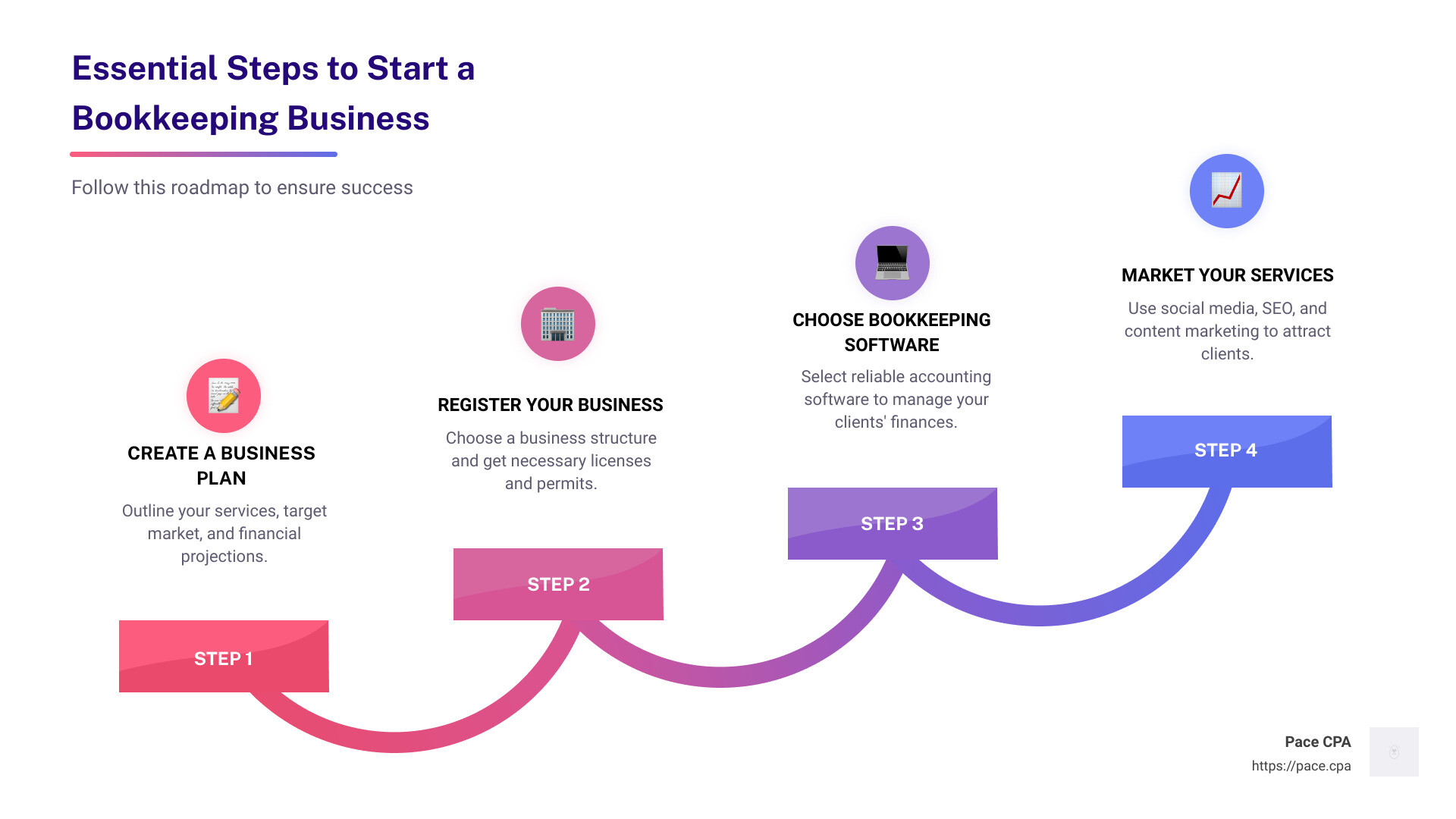
When launching a new venture, a bookkeeping business startup checklist is essential to ensure a smooth and efficient setup. Here are the key steps to get you started:
- Create a business plan
- Register your business
- Choose the right bookkeeping software
- Set up your office (virtual or physical)
- Price your services
- Market your services
A bookkeeping business is a fantastic opportunity, whether you’re aiming to make extra income or build a full-time operation to support your family. One of the biggest advantages is that it requires very little startup capital. This makes it accessible to many entrepreneurs.
Besides the low initial costs, running a bookkeeping business offers flexibility and convenience. You can work from home, set your own hours, and decide your workload. This flexibility is particularly valuable if you balance other responsibilities.
I’m John F. Pace, CPA, with over 40 years of experience in tax planning, business management, and bookkeeping. From overseeing trust and estate administration to managing a family office, I have deep insights into what makes a bookkeeping business thrive. Now, let’s dig into the crucial steps to get your bookkeeping business off the ground.
What Does a Bookkeeper Do?
A bookkeeper plays a vital role in maintaining the financial health of a business. They manage the day-to-day financial transactions and ensure that all financial records are accurate and up-to-date. Let’s break down the key tasks and responsibilities of a bookkeeper:
Tasks and Responsibilities
1. Recording Transactions
Bookkeepers document every sale and expense, tracking down receipts and maintaining the general ledger. This ensures that every financial activity is accurately recorded.
2. Managing Accounts Payable (AP) and Accounts Receivable (AR)
Bookkeepers handle the company’s AP and AR. This includes issuing invoices, tracking payments, and managing bills. They ensure that the company pays its bills on time and collects payments from clients, which is crucial for maintaining cash flow.
3. Generating Financial Statements
Bookkeepers prepare essential financial statements such as:
- Profit & Loss Statements: Show the revenue, costs, and expenses over a specific period.
- Balance Sheets: Outline assets, liabilities, and equity at a specific point in time.
- Cash Flow Statements: Track the inflow and outflow of cash within the business.
These reports provide a snapshot of the company’s financial status and are vital for making informed business decisions.
Ensuring Financial Health
By keeping accurate records, bookkeepers help business owners understand their financial processes and monitor their cash flow. This data is essential for optimizing financial performance and making strategic decisions.
Additional Responsibilities
1. Categorizing Expenses
Bookkeepers categorize expenses correctly to ensure accurate financial reporting and tax preparation. This helps in understanding where the money is going and aids in budgeting.
2. Reconciling Accounts
They reconcile bank accounts to catch any discrepancies between the records and bank statements. This is crucial for ensuring all income and expenses are accounted for.
3. Filing Receipts and Documents
Bookkeepers file receipts and other financial documents, either physically or digitally. This helps maintain a paper trail and ensures that all expenses can be proven if audited.
Difference Between a Bookkeeper and an Accountant
While both bookkeepers and accountants deal with financial data, their roles are distinct. Bookkeepers handle the daily financial activities and maintain accurate records. Accountants, on the other hand, analyze these records to provide deeper insights, financial forecasts, and strategic advice.
Example:
- Bookkeepers generate the financial reports.
- Accountants use these reports to evaluate financial health and offer solutions.
Becoming a Certified Bookkeeper
Though not mandatory, obtaining certifications like the Certified Public Bookkeeper (CPB) can improve your credibility. Certifications from platforms like QuickBooks can also be beneficial.
By understanding these tasks and responsibilities, you can see how bookkeepers are essential for any business. They ensure that the financial foundation is solid, allowing businesses to thrive.
Next, we’ll explore how to start a bookkeeping business in nine simple steps.
How to Start a Bookkeeping Business in 9 Steps
Step 1: Pick Your Market
Choosing the right market is crucial for your bookkeeping business. Specializing in a niche can set you apart from competitors. Consider your expertise and interests. Do you prefer working with small businesses, nonprofits, or perhaps the tech industry?
Competitive Analysis:
- What is your area of expertise?
- Who are your potential competitors?
- What services do they offer, and at what price points?
- What gaps can you fill in the market?
Step 2: Write a Business Plan
A solid business plan is your roadmap to success. It helps you set goals, secure funding, and make informed decisions.
Business Plan Essentials:
- Executive Summary: Brief overview of your business idea.
- Services: Detailed description of the bookkeeping services you will offer.
- Competitive Advantages: What sets you apart from others?
- Market Research: Understand your target market and its needs.
- Leadership Structure: Outline your team and their roles.
- Financial Projections: Estimate your revenue, expenses, and profit margins.
Step 3: Certification for Your Bookkeeping Business
While not mandatory, certifications can boost your credibility and attract clients. Consider becoming a Certified Public Bookkeeper (CPB) or getting certified in popular software like QuickBooks Online.
Professional Skills:
- Accounting Principles: Master the basics.
- Software Proficiency: Be skilled in at least one accounting software.
- Tax Preparation: Understand the fundamentals of tax filing.
Step 4: Register Your Business and Get Insured
Choosing the right business structure is essential for legal and financial reasons.
Business Structure Options:
- Sole Proprietorship: Simple but offers no personal liability protection.
- LLC (Limited Liability Company): Provides liability protection and is flexible.
- Corporation: Offers strong liability protection but is more complex to set up.
Insurance Needs:
- General Liability Insurance: Protects against common business risks.
- Professional Liability Insurance: Covers errors and omissions in your work.
- Worker’s Compensation Insurance: Required if you have employees.
Step 5: Choose Bookkeeping Software
Selecting the right software can streamline your operations and improve accuracy.
Software Options:
- Accounting Software: QuickBooks, Xero, FreshBooks.
- ERP Software: For more comprehensive business management.
- BILL: A centralized platform for managing finances.
Integration:
Ensure your chosen software integrates well with other tools you use, like CRM or file-sharing platforms.
Step 6: Set Up Business Infrastructure
Your business infrastructure includes your website, CRM, file-sharing tools, and business bank account.
Infrastructure Essentials:
- Website: Create a professional website to attract clients.
- CRM (Client Relationship Management): Manage client interactions efficiently.
- File Sharing: Use secure tools for sharing sensitive documents.
- Business Bank Account: Keep your business and personal finances separate.
Step 7: Price Your Services
Pricing your services correctly is crucial for profitability.
Pricing Strategy:
- Competitive Analysis: Research what others in your niche are charging.
- Monthly Rate or Hourly Rate: Decide which model works best for you.
- Discounts: Offer discounts for long-term contracts or referrals.
- Cash Flow: Ensure your pricing covers your costs and leaves room for profit.
Step 8: Find Your Customers
Marketing is essential for attracting and retaining clients.
Marketing Strategy:
- Target Market: Identify and understand your ideal clients.
- Social Media: Use platforms like LinkedIn and Facebook to reach potential clients.
- Content Marketing: Write blogs or create videos showcasing your expertise.
- SEO: Optimize your website to rank higher on search engines.
Step 9: Research Your Funding Options
Starting a business often requires initial investment. Explore various funding options.
Funding Options:
- Startup Costs: Calculate your initial expenses.
- Business Bank Account: Open an account to manage your finances.
- Business Credit Card: Helps manage cash flow and build credit.
- Funding: Consider personal savings, small business loans, or investors.
By following this bookkeeping business startup checklist, you can set a strong foundation for your new venture. Next, we’ll dive into a detailed checklist to ensure you don’t miss any critical steps.
Checklist for Starting a Bookkeeping Business
Starting a bookkeeping business involves several critical steps. Here’s a bookkeeping business startup checklist to ensure you cover all the essentials.
Market Selection
Identify your target market. Will you specialize in a particular industry or cater to a broad range of clients? Niche markets can help you stand out and become an expert in a specific area.
Business Plan
A solid business plan is crucial. It should include:
- Executive Summary: An overview of your business.
- Services: Detailed description of the services you’ll offer.
- Competitive Advantages: What sets you apart.
- Market Research: Analysis of your target market.
- Leadership Structure: Who’s who in your business.
- Financial Projections: Revenue, expenses, and profit forecasts.
Business Name
Choose a name that reflects your services and is easy to remember. Ensure it’s unique and not already in use.
Certification
Certification adds credibility. Consider credentials like Certified Public Bookkeeper or QuickBooks Online certification to boost your expertise.
Registration
Register your business with the appropriate state authorities. Choose a structure that fits your needs, whether it’s a sole proprietorship, LLC, or corporation.
Insurance
Protect your business with the right insurance. Essential types include:
- Liability Insurance: Covers legal claims.
- General Liability Insurance: Protects against general risks.
- Worker’s Compensation Insurance: For any employees you might hire.
Software
Select reliable bookkeeping software. Options include:
- Accounting Software: QuickBooks, Xero.
- ERP Software: For larger operations.
- BILL: A centralized platform to manage finances.
Website
Build a professional website. It’s your online business card. Include information about your services, contact details, and client testimonials.
CRM
Invest in a Client Relationship Management (CRM) system to keep track of client interactions and manage relationships effectively.
File-Sharing
Choose a secure file-sharing tool to exchange documents with clients. Options include Google Drive, Dropbox, or specialized accounting software features.
Bank Account
Open a business bank account to keep your finances organized and separate from personal accounts.
Pricing
Develop a competitive pricing structure. Consider:
- Monthly Rate: Consistent income.
- Discounts: For long-term clients or bulk services.
- Cash Flow: Ensure your pricing covers expenses and profit margins.
Marketing
Create a marketing plan to attract clients. Include:
- Social Media: Engage with potential clients.
- Content Marketing: Blog posts, articles.
- SEO: Improve your website’s search engine ranking.
Funding
Explore funding options to cover startup costs. Options include:
- Personal Savings: Use your own money.
- Small Business Loans: From banks or credit unions.
- Investors: Seek out angel investors or venture capital.
By following this bookkeeping business startup checklist, you can set a strong foundation for your new venture. Next, we’ll dive into a detailed checklist to ensure you don’t miss any critical steps.

Frequently Asked Questions about Starting a Bookkeeping Business
Starting a bookkeeping business can seem daunting. Here are answers to some common questions to help you get started.
How to start a bookkeeping business step by step?
Market Selection: First, decide your target market. Will you focus on a specific industry? Specializing can help you stand out.
Write a Business Plan: A solid business plan is essential. Include an executive summary, services you’ll offer, competitive advantages, market research, leadership structure, and financial projections.
Certification: While not always required, certification can boost your credibility. Consider becoming a certified public bookkeeper or getting certified in QuickBooks Online.
Register Your Business: Choose your business structure (sole proprietorship, LLC, corporation) and register it. Don’t forget to get the necessary insurance, like general liability insurance.
Choose Bookkeeping Software: Select reliable accounting software. Options like QuickBooks or Xero are popular. BILL is also a great tool for managing your operations.
Set Up Business Infrastructure: Build a website, invest in CRM software, and choose a file-sharing tool like Dropbox. Open a business bank account to separate personal and business finances.
Price Your Services: Research your competitors to set competitive rates. Consider offering discounts for long-term contracts.
Marketing: Develop a marketing strategy. Use social media, content marketing, and SEO to attract clients.
Funding: Explore funding options if needed. Personal savings, small business loans, and investors are common sources.
How do I start bookkeeping for beginners?
Business Account: Open a dedicated business bank account. This keeps your personal and business finances separate.
Tax Budget: Set aside money for taxes. This prevents any surprises during tax season.
Organized Records: Keep all your financial records organized. Use cloud-based software to store receipts, invoices, and statements.
Track Expenses: Regularly track and categorize your expenses. This helps you understand your cash flow and where your money is going.
Daily Records: Update your books daily. This makes it easier to catch errors and stay on top of your finances.
Audit Trail: Maintain an audit trail by keeping detailed records of all transactions. This is crucial for transparency and accountability.
Accounts Receivable: Stay on top of your invoices. Make sure you know who owes you money and follow up on late payments.
Tax Deadlines: Mark all tax deadlines on your calendar. Missing deadlines can result in penalties.
Do startups need a bookkeeper?
In-House Tasks: As a startup, you might handle bookkeeping yourself initially. But as you grow, this can become time-consuming and complex.
Skilled Experts: Hiring a bookkeeper ensures your financial records are accurate. They can handle tasks like invoicing, expense tracking, and financial reporting.
Clean Books: A bookkeeper keeps your books clean and organized. This is crucial for making informed business decisions.
Financial Reports: Bookkeepers provide detailed financial reports, such as profit & loss statements and balance sheets. These reports help you understand your financial health and plan for the future.
By addressing these common questions, you’re better prepared to start and manage your bookkeeping business effectively.
Conclusion
Starting a bookkeeping business is a rewarding journey. From picking your market to setting up your infrastructure and pricing your services, each step is crucial. Our bookkeeping business startup checklist ensures you won’t miss any important details.
At Pace CPA, we understand the challenges startups face. That’s why we offer expert guidance custom to your specific needs. Our team of highly trained professionals stays up-to-date on the latest accounting practices and technologies.
Custom Services: Every startup is unique, and so are its financial needs. We provide customized services that scale with your business, from basic bookkeeping to advanced financial planning. This allows you to focus on what you do best: growing your business.
Expert Guidance: By outsourcing your bookkeeping to us, you free up valuable time and resources. This strategic move can drive your startup’s success by ensuring your financial records are accurate, compliant, and insightful.
Ready to take the next step? Contact us today to discuss how we can help you streamline your financial operations and fuel your growth.
Starting a bookkeeping business requires dedication and careful planning, but with the right tools and guidance, you can turn your passion into a thriving enterprise.


